
ICS-CAAS held the Sino-German Workshop on Genomics, Breeding and Agricultural Innovation
From September 28 to 30, the Institute of Crop Sciences, Chinese Academy of Agricultural Sciences (ICS-CAAS) and the Leibniz Institute of Plant Genetics and Crop Plant Research (IPK), Germany, co-hosted the Sino-German Workshop on Genomics, Breeding and Agricultural Innovation in Beijing. Ms. Song Song, Deputy Director of the Europe Division, Department of International Cooperation, Ministry of Science and Technology; Prof. Dr. Wende Liu, Deputy Director-General of the Department of International Cooperation, CAAS; Mr. Tianjin Chen, Director of the Division of Bilateral Cooperation, Department of International Cooperation, CAAS; Prof. Dr. Wenbin Zhou, Director General of ICS-CAAS; and Prof. Dr. Nicolaus von Wirén, Managing Director of IPK attended the opening ceremony. The opening ceremony was presided over by Prof. Dr. Wensheng Wang, Deputy Director of ICS-CAAS.
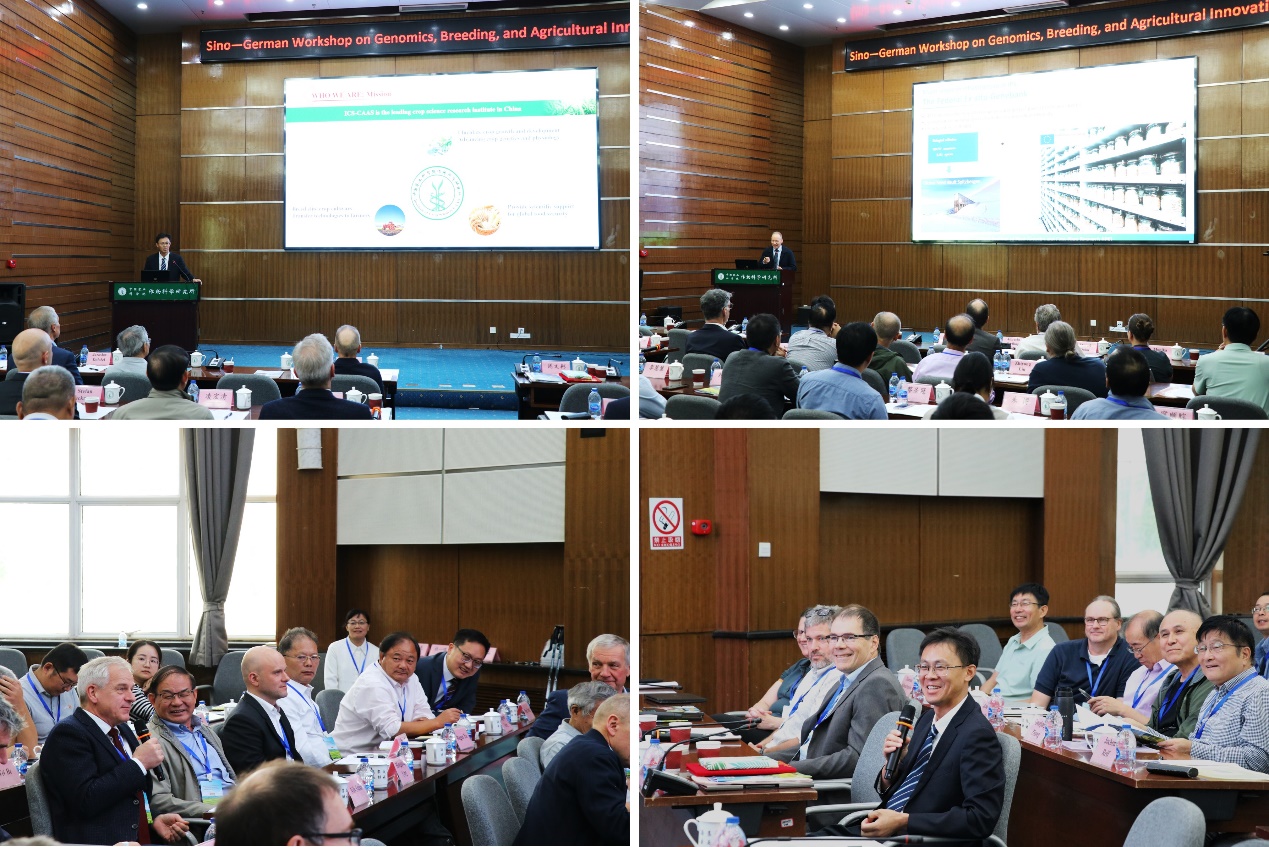
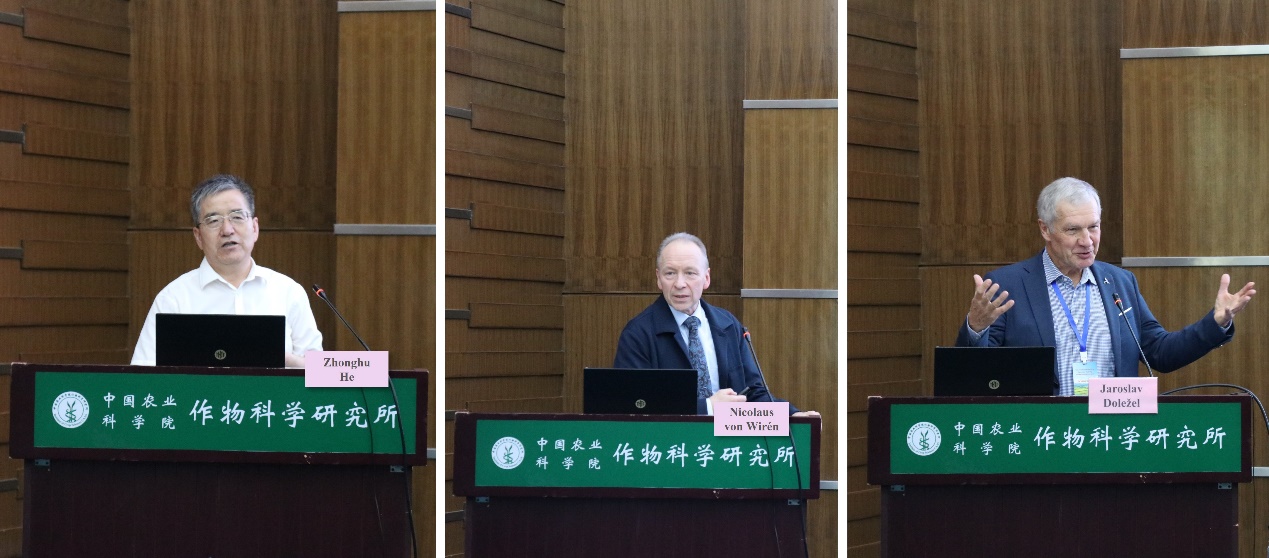
On the section of institutional dialogue, Prof. Dr. Wenbin Zhou and another 6 representatives from different universities, research institutes and breeding company, from Germany, United Kingdom, and Czech Republic, gave introduction about their institutions, regarding the missions, the development concepts, as well as their experiences and achievements in international cooperations. On the section of research progress, there were 26 international highly recognized experts, including Prof. Dr. Zhonghu He, Member of the Chinese Academy of Engineering, Prof. Dr. Nicolaus von Wirén, Member of the German National Academy of Sciences Leopoldina, and Prof. Dr. Jaroslav Doležel, Member of the European Academy of Sciences, presented the latest advances in genomics and molecular breeding of cereal crops, chromosomal and quantitative genetics, developmental biology and crop physiology, biotechnology and artificial intelligence, with lively discussion on-site.
It indicated on the workshop that, China and Germany are both leading countries in crop science, with respective strengths highly complementary. Deepening the bilateral cooperation would help us share the germplasm, data, and young talent. It will turn basic research into real solutions for food security and green agriculture. ICS-CAAS and IPK, with the joint funding from the National Natural Science Foundation of China (NSFC) and the German Research Foundation (DFG), have carried out in-depth cooperation in crop genomics, genetics and breeding during the past few years, achieved a number of significant results, and set an excellent example of successful international collaborative research. It expects that, scientists from different countries take this workshop as an opportunity to fully communicate, learn from each other, build consensus, and jointly promote the high-quality development of global crop science and industry.
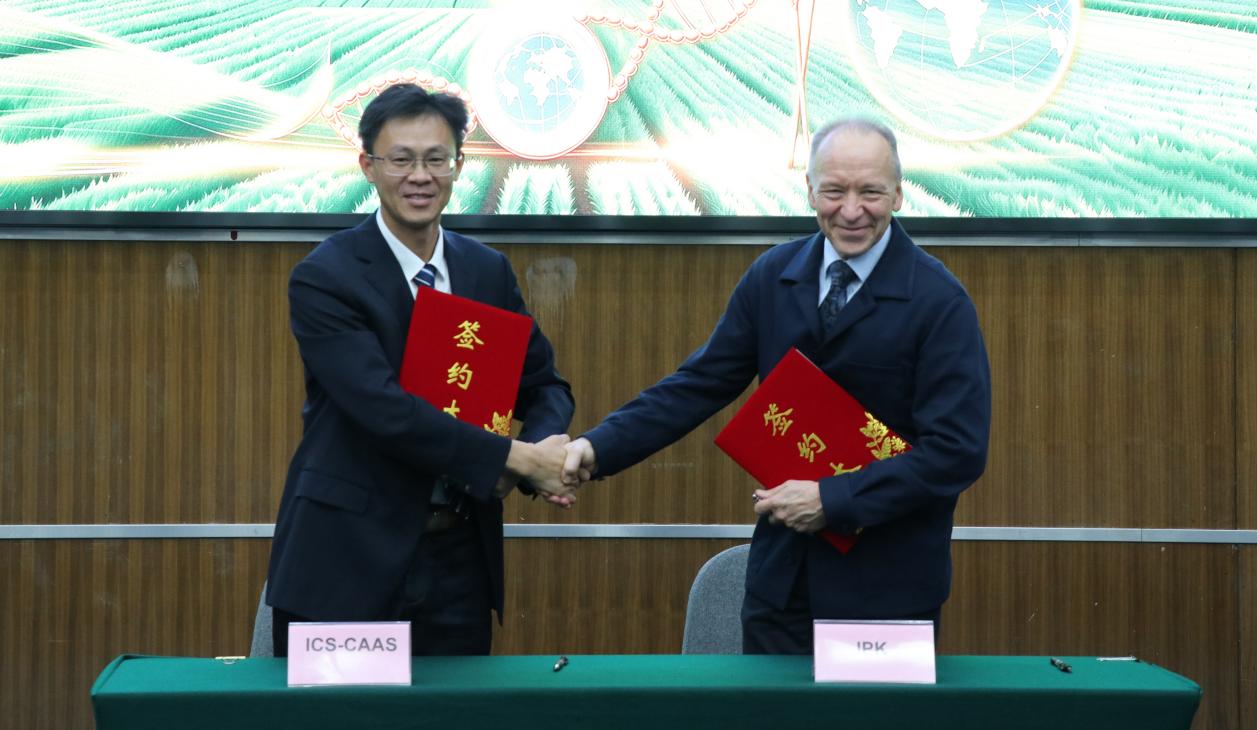
On this workshop, Prof. Dr. Wenbin Zhou and Prof. Dr. Nicholas von Wirén signed a Memorandum of Understanding (MoU) on behalf of ICS-CAAS and IPK, respectively. They agreed to promote deepening of practical cooperation between China and Germany, working closely in areas like co-hosting international conferences, scientist exchanges, and applications for joint funds, all to collaboratively support global crop science innovation and green and sustainable development.
As introduced by the organizers, this workshop was supported by the Sino-German Mobility Programme "Unlocking genetic basis of cultivated barley to adapt district environments by population genomics", which is jointly granted to Dr. Ping Yang from ICS-CAAS and Dr. Martin Mascher from IPK. Since the programme initiated in 2022, the two groups co-published 6 SCI papers in high rank journals such as Molecular Plant and Plant Communications, on research topics including high-quality barley mutagenesis populations and efficient screening platforms, key regulatory genes of early maturity, and the genetic origins of Tibetan weedy barley. They have also developed over 20 novel germplasms with early-maturity and disease-resistance, jointly organized 4 international conferences, had 2 young scientists included in academic training. The bilateral cooperation played an important role in promoting scientific innovation, and also the impact of Chinese scientists in global barley research community.
Totally more than 120 experts from 22 institutions from Germany, UK, Czech Republic, and China attended this workshop.

Address:No.12 Zhongguancun South St.,Haidian
District, Beijing, P.R.China 100081
Tel: +86-10-82105813
Email:zkskyc@caas.cn
Fax:+86-10-82105819