
The 16th International Buckwheat Symposium(2026)
On June 25, the 16th International Buckwheat Symposium opened in Xichang, Liangshan Prefecture, Sichuan Province. Officials and experts attending the opening ceremony included Yang Zhenhai, Secretary of the Leading Party Group, CAAS; Zhang Wenwang, Governor of Liangshan Prefecture; Prof. Zhou Wenbin, Director General of ICS-CAAS; Ivan Kreft, a member of the Slovenian Academy of Sciences and Arts and Honorary President of the International Buckwheat Research Association; and Jise Fangsen, President of the Liangshan Yi Autonomous Prefecture Academy of Agricultural Sciences. The ceremony was chaired by Liu Xu, a member of the Chinese Academy of Engineering.
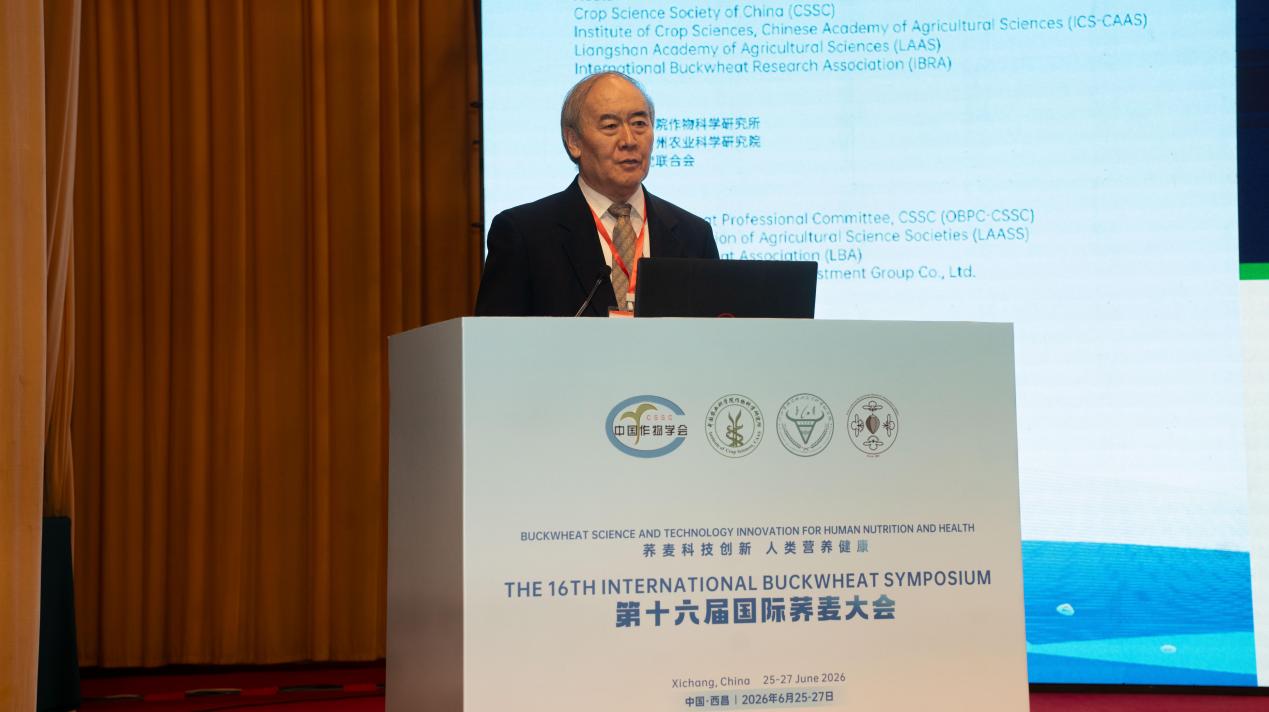
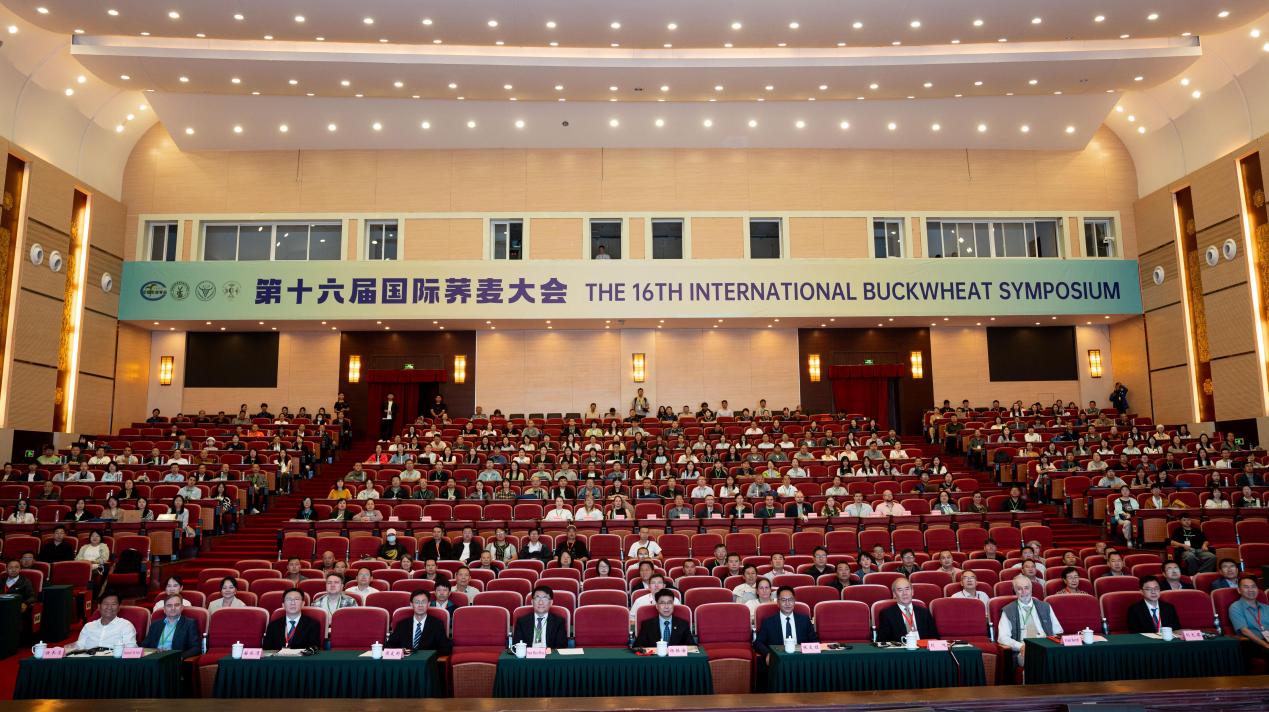
Commissioned by the International Buckwheat Research Association, the symposium was held with Prof. Zhou Meiliang of ICS-CAAS serving as Executive Chair. Under the theme “Buckwheat Science and Technology Innovation for Human Nutrition and Health,” it addressed key topics including buckwheat germplasm innovation, advanced processing for nutritional products, functional product development, integration of agriculture, culture and tourism, and the preservation of ethnic farming traditions. The symposium provided an international, multidisciplinary platform linking industry, academia, and research to explore innovative ways for the buckwheat sector to support global food security, public health, and rural revitalization in mountainous areas. Nearly 300 experts, scholars, and business representatives from 15 countries, including China, Russia, Poland, India, Italy, the Republic of Korea, and Slovenia, attended.
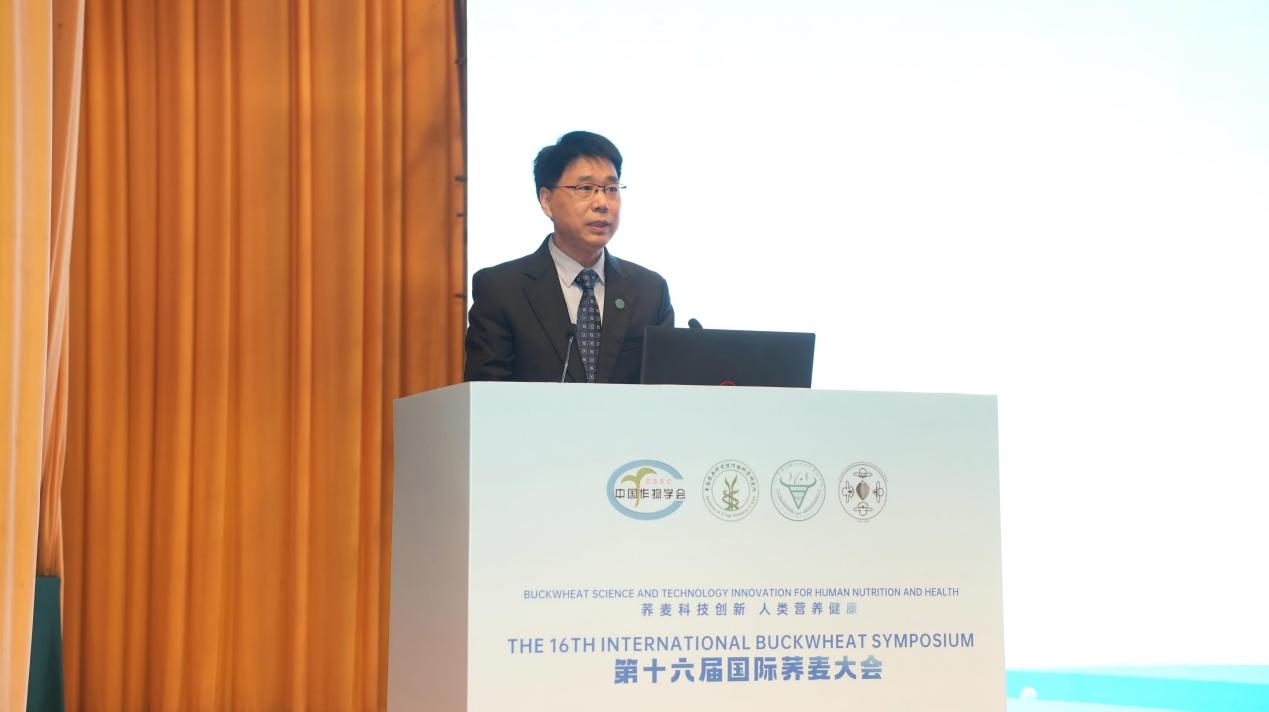
In his address, Yang Zhenhai congratulated the organizers on the opening of the symposium and thanked all sectors for their support. He noted that China is a center of origin of buckwheat and possesses rich germplasm resources. It has developed coordinated production of Tartary buckwheat, common buckwheat, and golden buckwheat, with differentiated industrial development in northern and southern China and a complete modern value chain. Guided by an all-encompassing approach to food, CAAS has focused on innovation throughout the buckwheat value chain, established a globally leading germplasm conservation system, and achieved a series of original advances in understanding buckwheat origin, domestication and evolution, elucidating the molecular mechanisms of key genes, and developing and promoting high-yielding, high-quality varieties. He emphasized the need to accelerate the development of a complete value chain covering improved variety breeding, standardized cultivation, discovery of functional components, advanced processing, and quality traceability throughout production, while strengthening collaborative innovation across the chain. He called for long-term mechanisms for joint research, shared germplasm platforms and collaborative innovation laboratories, and smoother exchanges of people, technologies, and resources. He also stressed the need to integrate scientific and technological innovation with industrial innovation, accelerate the application of research results, expand the supply of healthy buckwheat products, sustain income growth among people in mountainous areas, strengthen diversified safeguards for global food security, and promote high-quality development of the buckwheat industry.
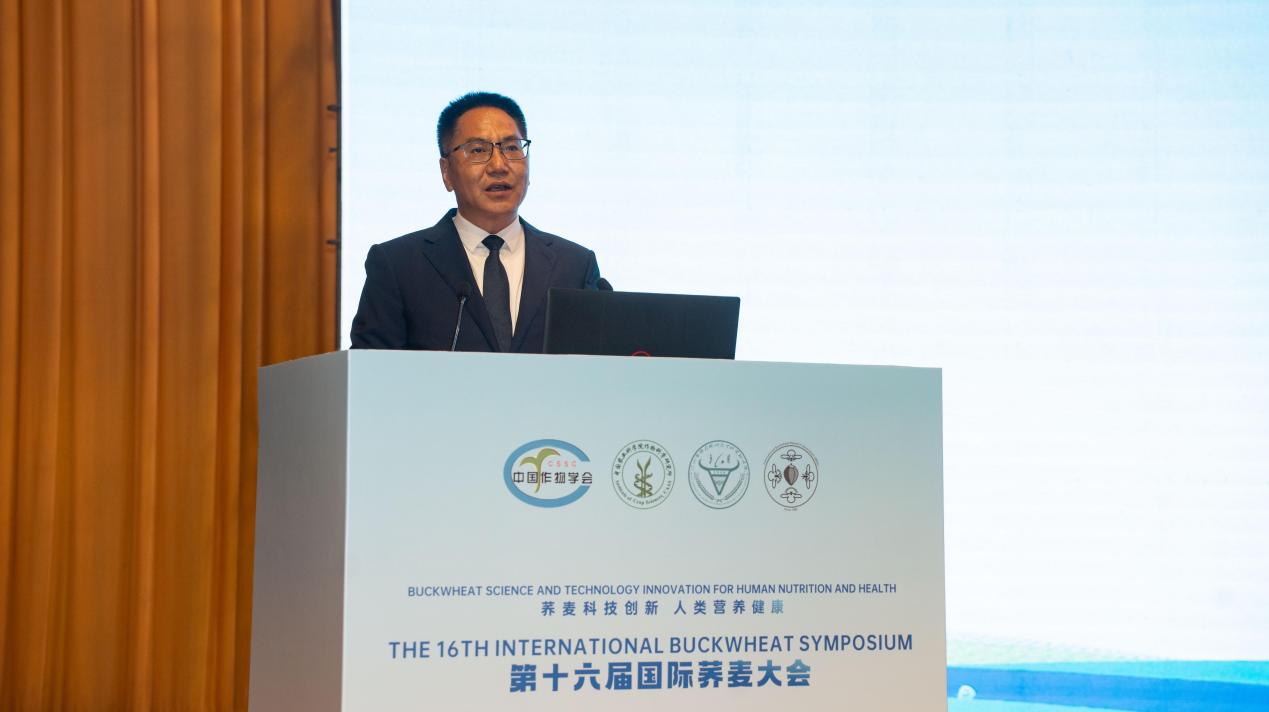
Zhang Wenwang noted that Liangshan lies within the world’s prime belt for Tartary buckwheat production. It is China’s largest Tartary buckwheat producing region and is known as the “Tartary Buckwheat Capital of China.” More than 3,000 years of cultivation have given rise to a distinctive Yi buckwheat culture. Liangshan is implementing the CPC Central Committee’s strategic positioning of “two zones, three centers and one granary” and working to develop the Liangshan section of the “Tianfu Granary in the New Era.” In recent years, the prefecture has promoted development across the entire value chain, from Tartary buckwheat breeding and advanced processing to brand building, with annual processing output exceeding RMB 1 billion. Liangshan will use the symposium as an opportunity to work with partners in China and abroad to strengthen global collaboration in buckwheat germplasm research, mutually beneficial industry and trade exchanges, and dialogue among farming cultures. It will make Tartary buckwheat a core pillar of its development into a strong agricultural prefecture, translating its resource advantages into scientific, technological, and brand strengths and providing replicable and scalable “Liangshan solutions” for the global buckwheat industry.
Prof. Zhou Wenbin explained that ICS-CAAS has long been committed to innovation in buckwheat science and technology, combining support for local industries with international academic exchanges. The institute has actively contributed to global buckwheat germplasm conservation, research on key technologies, and industry standards, supporting high-quality development of the sector worldwide. Since 2017, ICS-CAAS has sent specialist science and technology service teams to Liangshan and other major buckwheat producing regions to provide technology extension and targeted assistance, and has led the establishment of the world’s largest wild buckwheat germplasm collection. These efforts have improved the quality and efficiency of China’s Tartary buckwheat industry and increased farmers’ incomes while providing strong support for global buckwheat innovation. He expressed the hope that the symposium would deepen exchanges and cooperation, combine the strengths of different partners, and continue to advance specialty grain industries, enabling China to contribute to global food security and high-quality development of the buckwheat sector.
In her address, Grażyna Podolska reviewed the achievements of the international buckwheat symposium series since its first meeting and the development of the buckwheat scientific community. During the symposium, Academician Ivan Kreft of the University of Ljubljana, Slovenia; Academician Liu Xu of CAAS; Prof. Ren Changzhong of the Baicheng Academy of Agricultural Sciences, Jilin; and Prof. Qumu Tiexi of Minzu University of China delivered keynote presentations on, respectively, genetics and ideotypes in buckwheat breeding, a retrospective and outlook on China’s crop germplasm resources, the development of China’s oat and buckwheat industrial technology system, and the origin, dispersal and spread of buckwheat from a linguistic perspective.
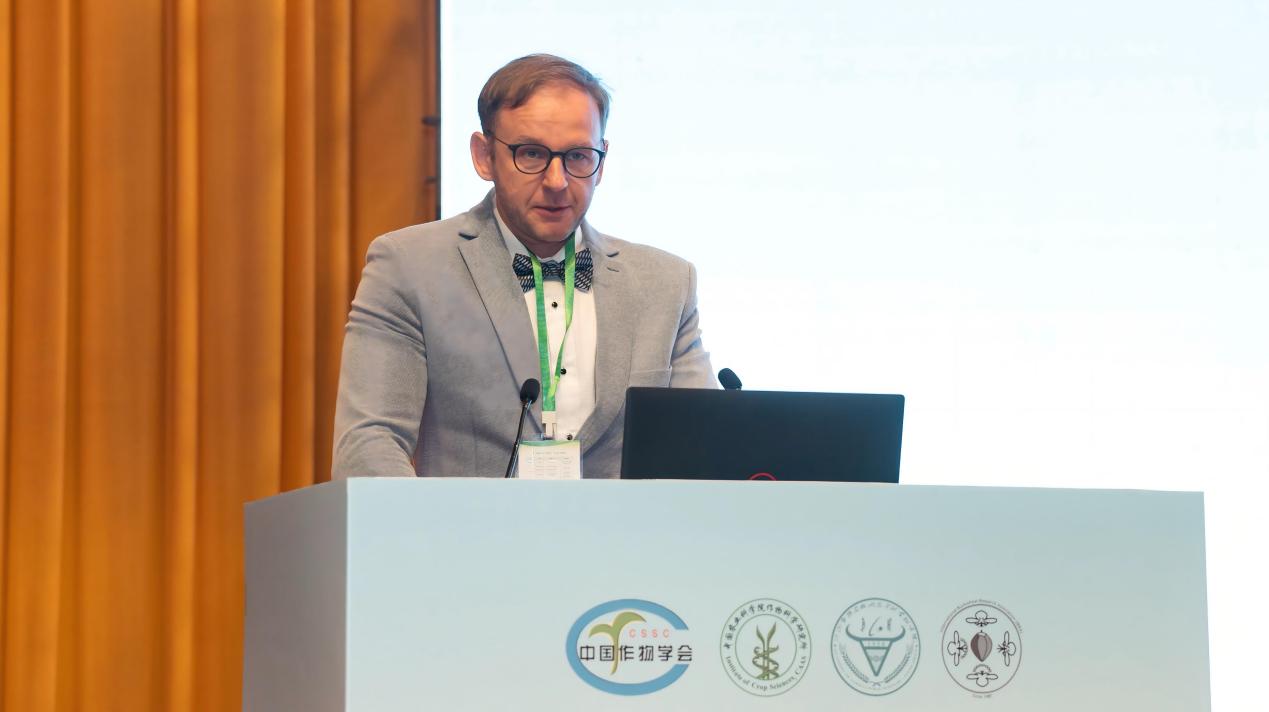
The symposium is a leading global academic and industry gathering in buckwheat and marks China’s first hosting of the international event in 19 years. The three-day program includes keynote presentations, parallel sessions, a postgraduate forum, experiences of intangible cultural heritage, and industry site visits. Addressing major needs in global food security and public nutrition and health, the symposium brings together research and industry resources from around the world and removes barriers to international collaboration. It showcases achievements from key projects, including China’s ex situ buckwheat germplasm conservation collection, standardized green cultivation bases, the Xichang Intelligent Tartary Buckwheat Processing Industrial Park, and the China Tartary Buckwheat Culture Expo Park, alongside global buckwheat research advances, contributing to a more diversified global food supply. Hosting the symposium in Xichang also highlights China’s leading role in global buckwheat research, germplasm conservation, and industrial development. It provides an important international cooperation platform for sharing Chinese agricultural innovation solutions, connecting ethnic minority regions with international markets, and preserving China’s farming heritage.
At the closing ceremony, the International Buckwheat Research Association is scheduled to release the Liangshan Initiative in 11 languages. The initiative will call on all parties, on a voluntary, open, and cooperative basis, to strengthen the conservation and innovative utilization of Tartary buckwheat germplasm and coordinate basic research, applied research, and the translation of results into industry. It seeks to make full use of the strengths of the Tartary buckwheat sector to serve human health, protect the environment, and strengthen distinctive regional economies. The event will also formally establish Liangshan’s positioning as the “Global Capital of Tartary Buckwheat.”
As a key national research team in buckwheat, the group led by Prof. Zhou Meiliang of ICS-CAAS has overcome the technical challenge of selecting highly cross-compatible parents for wide hybridization between golden buckwheat and cultivated Tartary buckwheat. The team has developed more than 220 new hybrid lines with high flavonoid content and lodging resistance, independently generated over 50 novel germplasm lines through induced mutagenesis, and jointly bred eight new varieties in the Zhongqiao and Chuanqiao series, with cumulative adoption exceeding 2 million mu (approximately 133,333 hectares). Among them, the Tartary buckwheat variety Zhongqiao 121 was developed over eight years by ICS-CAAS and three partner institutions. It combines high yield and broad adaptation with the easy-dehulling trait urgently needed by the buckwheat industry. The variety eliminates the need for high-temperature steaming or cooking before dehulling, maximizing the retention of Tartary buckwheat’s nutritional value and supporting its processing and use as a whole grain. Improved varieties are helping make Tartary buckwheat a key specialty industry for stable income growth in Yi communities.
Under the guidance of the Ministry of Agriculture and Rural Affairs and the People’s Government of Liangshan Yi Autonomous Prefecture, Sichuan Province, the symposium was jointly organized by the Crop Science Society of China, ICS-CAAS, the Liangshan Academy of Agricultural Sciences, and the International Buckwheat Research Association. Local arrangements were jointly undertaken by the Liangshan Agronomy Society, Xichang University, and other institutions.

Address:No.12 Zhongguancun South St.,Haidian
District, Beijing, P.R.China 100081
Tel: +86-10-82105813
Email:zkskyc@caas.cn
Fax:+86-10-82105819