
The 14th Asian Maize Conference(2026)
On August 15, the 14th Asian Maize Conference opened in Chengdu, Sichuan Province. Under the theme “Advancing Scientific and Technological Innovation to Address Climate Change,” the conference brought together more than 750 research institution leaders, breeding experts, seed industry professionals, and representatives of international organizations from 31 countries, including the Philippines, Bangladesh, Vietnam, and Nepal. Participants addressed the practical risks facing maize production in Asia, including intensifying climate change, increasingly frequent extreme weather, and the cross-border spread of pests and diseases, and combined their expertise to accelerate the transfer of research results from laboratories to farmers’ fields.
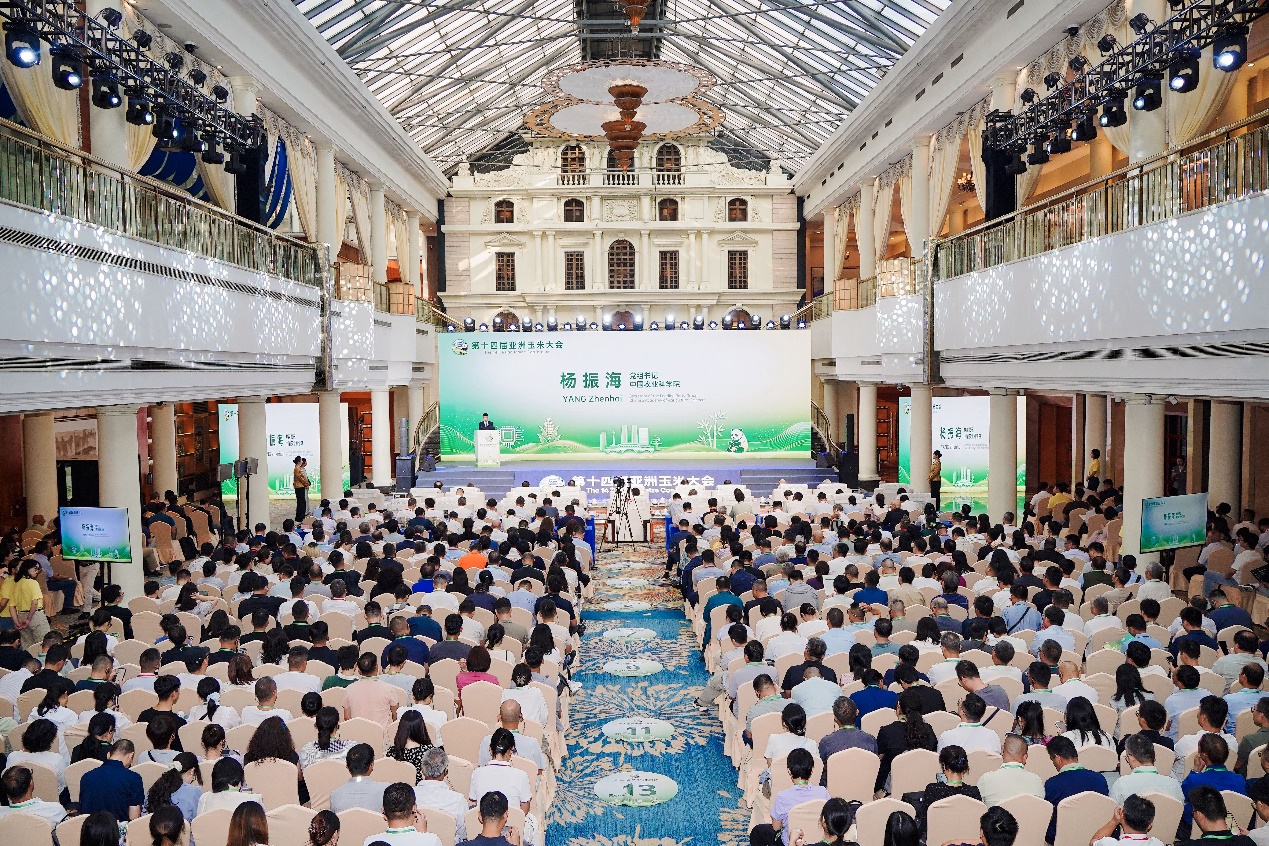
Officials and experts attending the opening ceremony included Yang Zhenhai, Secretary of the Leading Party Group, CAAS; Liu Chengming, Vice Chairman of the Sichuan Provincial Committee of the Chinese People’s Political Consultative Conference; Zhang Zhenhua, Deputy Director General of the Department of Science and Technology, Ministry of Agriculture and Rural Affairs; Deng Xingwang, a member of the US National Academy of Sciences; He Zhonghu and Wang Lichun, members of the Chinese Academy of Engineering; Boddupalli M. Prasanna, Distinguished Scientist and Regional Director for Asia at the International Maize and Wheat Improvement Center (CIMMYT); Prof. Li Xinhai of ICS-CAAS, Chief Scientist of China’s National Maize Industry Technology System; and Prof. Zhou Wenbin, Director General of ICS-CAAS. The ceremony was chaired by Sun Tan (Vice President of CAAS; Member of the Leading Party Group, CAAS), Chair of the conference organizing committee.
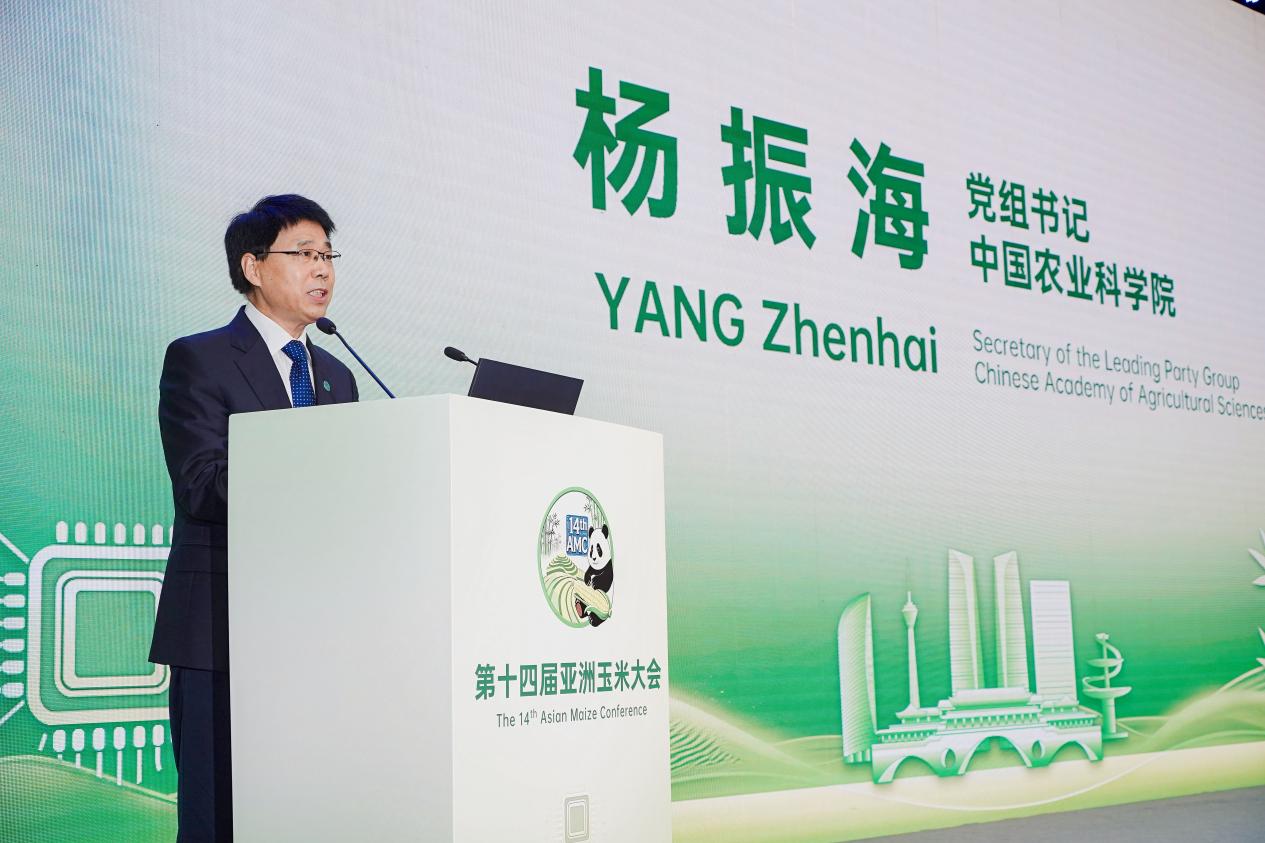
Yang Zhenhai noted that China is Asia’s largest maize producer and consumer and that the maize industry plays an important role in national food security. CAAS has sustained its work in germplasm exploration, breeding technology innovation, and the demonstration of high-yield cultivation systems, strongly supporting high-quality development of China’s maize sector and contributing to coordinated improvement of the industry across Asia. In particular, precision management technologies for high-density, high-yield maize production have supported the establishment of million-mu demonstration zones achieving yields of one tonne per mu in several parts of China, increasing yields and farmers’ incomes over large areas. He emphasized that no country can confront increasingly severe global challenges alone. He called for joint efforts to strengthen the two foundations of genetic resources and scientific and technological innovation, promote climate-resilient, green and sustainable production systems, and build an open and inclusive Asian maize cooperation community, advancing high-quality development of the region’s maize industry together.
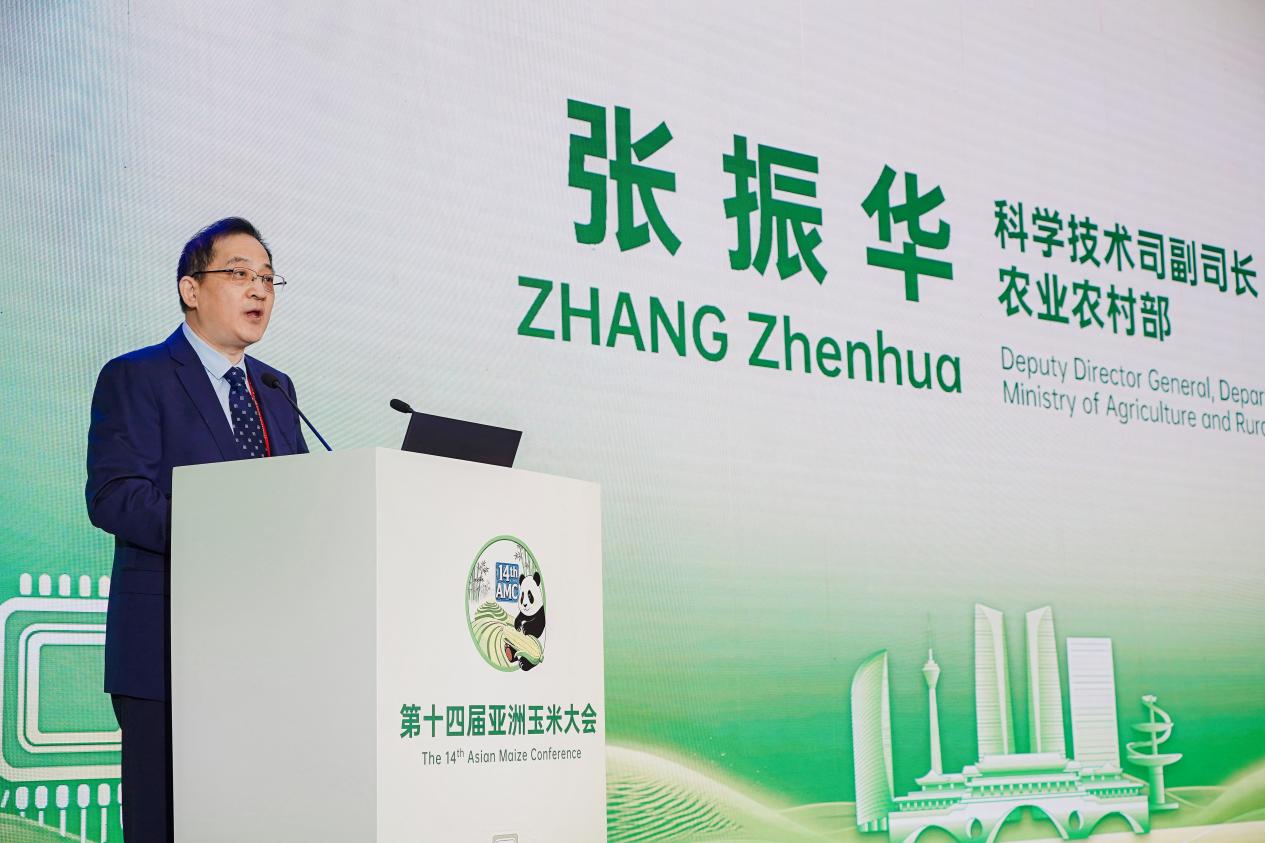
Zhang Zhenhua noted that the paradigm of scientific and technological innovation is changing. In response to this major opportunity and challenge, China has consistently placed maize innovation at the center of its research efforts on grain and oilseed crops. Through vigorous implementation of the maize yield improvement program and the integration of technologies, China is improving its innovation mechanisms and technology extension systems to address ecological constraints in different production regions. These efforts are moving the maize sector beyond a sole focus on yield toward stable production, stress resilience, high quality, efficiency, environmental sustainability, and intelligent management. China also remains committed to openness, inclusiveness, and mutual benefit, actively participating in joint research, resource sharing, and technology dissemination across Asia’s maize industry. It works with other countries to address climate-related, industrial, and other risks and promote coordinated, high-quality agricultural development in Asia. He called on participants to use the conference to establish a joint research framework for resilient breeding, develop green and intelligent production systems, and create regular mechanisms for scientific and technological exchanges, strengthening regional food security through practical cooperation.
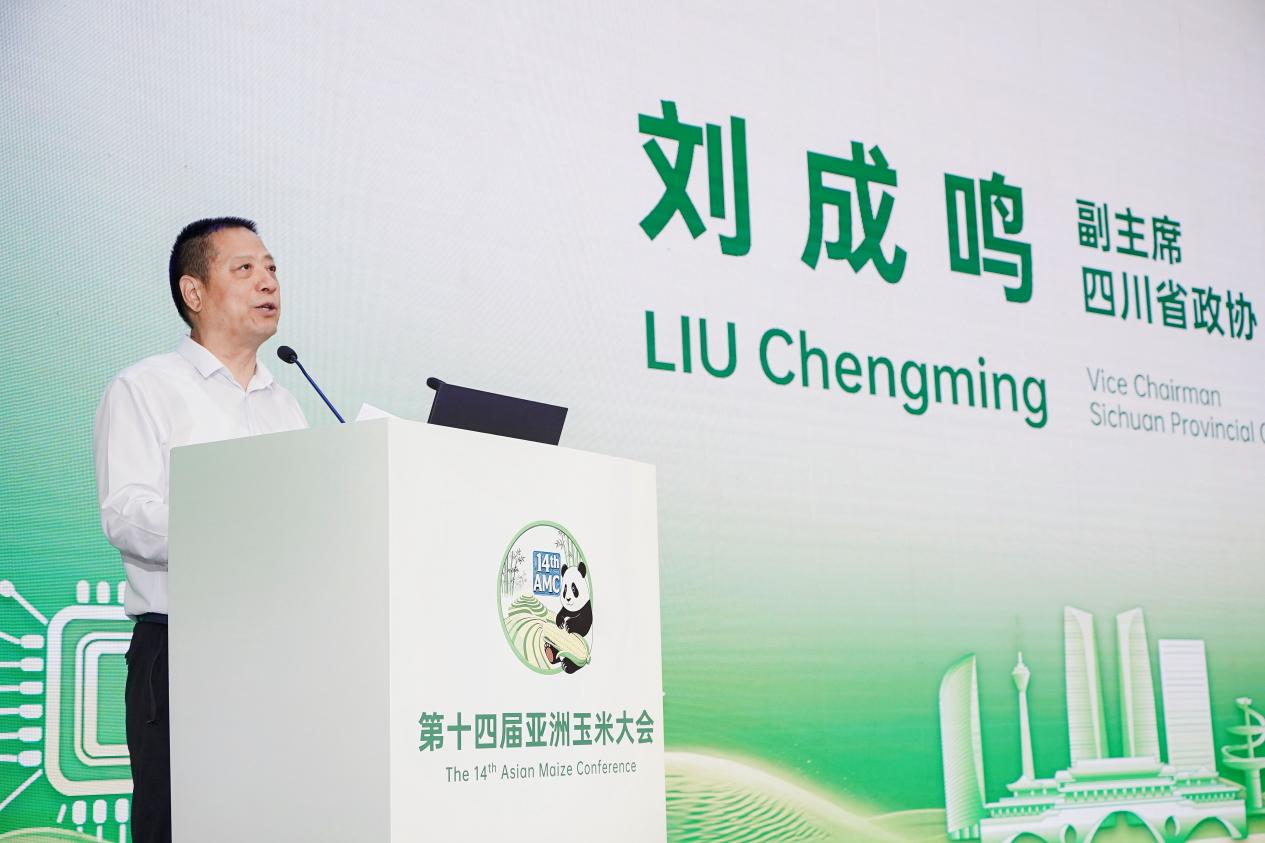
Liu Chengming explained that Sichuan is one of China’s major grain-producing provinces and a leading maize producer in the southwest, with an annual maize area exceeding 28 million mu (approximately 1.87 million hectares) and total production surpassing 10 million tonnes. Drawing on the characteristics of the province’s hilly and mountainous terrain, local research teams have developed maize varieties in the Chengdan and Chuandan series suited to southwestern environments and gained extensive experience in breeding varieties suitable for mechanization and in stress-resilient cultivation technologies. He said that Sichuan would use the conference to deepen international exchanges and cooperation in four areas: germplasm sharing, joint breeding research, dissemination of green technologies, and integration across the entire value chain. Working with all partners, the province aims to accelerate the identification of superior genes, the development of breakthrough varieties, and the integration of technologies suited to hilly areas, connecting research, varieties, cultivation, and processing throughout the value chain and contributing Sichuan’s expertise, solutions, and capabilities to mountain maize production in Asia.
At the conference, Boddupalli M. Prasanna reviewed half a century of cooperation between CIMMYT and China. He noted that the partnership has delivered many tangible results in germplasm exchange, joint breeding, and personnel training. He expressed the hope that the planned China–CIMMYT Southern Maize and Wheat Research Center would support further identification of valuable genes for heat tolerance, drought tolerance, and disease resistance, promote the application of new technologies such as gene editing and genomic selection, and connect research innovation with farmers’ production. Academicians and experts including Deng Xingwang, He Zhonghu, Li Xinhai, Yan Jianbing, and William S. Niebur then delivered keynote presentations on topics including molecular design breeding, maize genetic improvement and germplasm innovation in China, and the development of high-protein maize.
The Asian Maize Conference is a long-established and widely recognized regional platform for academic and industry exchanges. Since its first meeting in Thailand in 1981, it has been hosted by several major maize-producing countries in Asia, providing important channels for technology exchange, germplasm sharing, and personnel visits. This is the third time the conference has been held in China and the second time it has placed a major focus on climate change. The five-day program includes plenary keynote presentations, 11 thematic sessions, poster displays, an industry innovation forum, and field visits. Topics span the entire maize value chain, including genetic diversity exploration, genome analysis, biotechnology-based breeding, environmentally friendly pest and disease management, smart cultivation, agricultural modernization in hilly areas, and industrial policy and market analysis.
The conference includes a dedicated field visit to Jianyang, where participants will observe maize germplasm and new varieties, demonstrations of stress-resilient and high-yield technologies, agricultural machinery suited to hilly terrain, and maize drying and processing centers. These visits will provide a firsthand view of how new varieties, technologies, production models, machinery, and processing methods are being applied in southwestern China. Discussions will also address collaboration between research institutions and enterprises and industrial technologies such as molecular testing and AI-assisted breeding, helping bridge research and industry.
The conference is organized by CAAS, with the Sichuan Academy of Agricultural Sciences, Sichuan Agricultural University, and ICS-CAAS serving as joint hosts. Supporting organizers include the Sichuan Crop Science Society, the State Key Laboratory of Crop Gene Resources and Breeding, China Agricultural University, and other institutions and companies. CIMMYT is closely involved as a scientific and technological cooperation partner.

Address:No.12 Zhongguancun South St.,Haidian
District, Beijing, P.R.China 100081
Tel: +86-10-82105813
Email:zkskyc@caas.cn
Fax:+86-10-82105819